Roots, Deeds, and Dollars: How Black Diaspora Families Are Building Wealth on Two Continents at Once
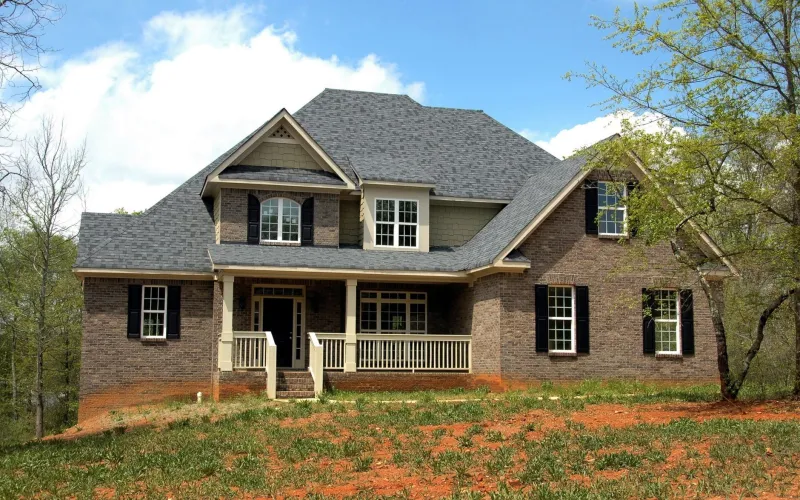
There's a house in Kumasi that Adwoa Mensah has never lived in. She's visited twice — once when the foundation was poured, once when the roof went on — but mostly she manages it from her kitchen table in Decatur, Georgia, laptop open, WhatsApp humming, navigating a seven-hour time difference and a currency exchange rate that never seems to cooperate. She bought the land with her sister back in 2019. By 2022, the house was built and rented out. By 2024, it had paid for itself.
"People ask me why I didn't just put that money into a 401(k)," she says with a laugh. "I did that too. But I wanted something my kids could actually touch."
Adwoa isn't an anomaly. Across the country — in Houston, in Brooklyn, in Silver Spring, Maryland — Black diaspora families are quietly executing a wealth-building strategy that Wall Street didn't hand them and that most mainstream financial media hasn't bothered to cover: buying property in their countries of origin while also, where possible, building equity in the United States. It's not a trend so much as a tradition being upgraded for a new generation, supercharged by digital tools, diaspora networks, and a very clear-eyed understanding that generational wealth doesn't have to follow one country's rules.
The Logic Behind the Land
For many diaspora families, the math is straightforward even when the logistics aren't. Property in cities like Nairobi, Accra, Lagos, or Dakar has appreciated significantly over the past decade. Land is finite, urban migration is accelerating across the continent, and in many cases, a dollar — or a euro, or a pound — still goes considerably further than it does stateside. For families who already have relatives on the ground, the informal infrastructure for managing property abroad often already exists.
But it's more than just numbers. There's a cultural logic at work too. In many West and East African traditions, owning land in your home country isn't just an investment — it's an identity claim. It's proof that you didn't leave for good. It's something to return to. It's something to hand down.
"My parents always said the land in Nigeria would be there for us," says Emeka Okafor, a software engineer in Austin who recently began the process of formalizing his family's inherited property in Anambra State. "But 'the land is there' is different from actually having a deed, a clear title, and a plan for it. My generation is trying to make that real."
The Real Obstacles (And They Are Real)
None of this is easy, and anyone selling you a frictionless version of transnational real estate investment is leaving out the most important parts of the story.
Currency exchange is one of the first walls you hit. When the naira, the cedi, or the Kenyan shilling fluctuates — and they do, sometimes dramatically — the value of your investment shifts in ways that are hard to predict or hedge against from thousands of miles away. Timing a wire transfer can feel like guessing the weather.
Then there's the legal complexity. Property law varies enormously across African nations, and in some countries, customary land rights, inheritance disputes, and unclear titling systems create real exposure for diaspora buyers who don't have local legal counsel they trust. Stories of land being sold twice, inheritance claims from extended family members, or properties tied up in probate for years are not urban legends — they're cautionary tales passed around diaspora WhatsApp groups with the kind of specificity that only comes from lived experience.
And then there's the management problem. Who checks on the property? Who collects rent? Who calls the plumber? For diaspora owners, building a reliable local team — a property manager, a lawyer, maybe a trusted cousin who's actually good at logistics — is often the difference between a successful investment and a years-long headache.
The Ecosystem Rising Around the Problem
Here's where it gets interesting: the diaspora is building solutions to its own problems, and doing it fast.
A new wave of startups and service providers is emerging specifically to serve transnational Black property investors. Companies like Diaspora Homes (operating in Nigeria and Ghana), Imara (focused on Kenya), and a growing number of boutique legal and financial advisory firms are positioning themselves as the connective tissue between diaspora dollars and African land markets. They offer everything from title verification and escrow services to property management and rental income repatriation.
At the same time, diaspora real estate investment clubs — operating a lot like the sou-sou circles that have long been part of community financial life — are pooling resources to buy larger commercial or residential properties that individuals couldn't access alone. These groups meet on Zoom, share due diligence, and leverage collective bargaining power in markets where relationships matter enormously.
"We have twelve families in our group," says Fatima Diallo, a Philadelphia-based nurse who co-founded a Senegalese-American real estate collective in 2021. "Together we bought a small apartment building in Dakar. Individually, none of us could have done it. Together, we're all landlords."
Doing It on Both Sides of the Atlantic
For some families, the strategy is explicitly dual-continent. Build equity in the US — through homeownership, rental properties, or both — while simultaneously acquiring property abroad. The American asset provides stability and access to US credit markets. The African asset provides appreciation potential, cultural continuity, and a hedge against the particular vulnerabilities of the American housing market for Black families.
It's a portfolio approach, not an either/or. And increasingly, it's one that younger, financially literate diaspora adults are inheriting — and improving on — from parents who did it more intuitively.
Kevin Asante grew up watching his Ghanaian-American parents wire money home every year to pay for land, then construction, then more land. He didn't fully understand it as a child. Now, with a finance background and a property in East Legon that he co-owns with his brother, he sees it differently.
"My parents didn't have apps or YouTube tutorials or diaspora investment groups," he says. "They just knew land was the thing. I'm just trying to do what they did, but smarter."
The Wealth Isn't Just Financial
Ask diaspora property owners what the real payoff is, and money comes up — but it doesn't always come up first. What comes up first, more often than not, is something harder to quantify.
It's the feeling of having somewhere to go back to. It's the conversation you get to have with your kids about where the family is from and what the family owns there. It's the dignity of not being a stranger in the land of your ancestors.
Adwoa Mensah puts it plainly: "When my daughter is grown, I want to hand her a key. Not a stock certificate she'll never look at. A key to something real, somewhere that matters to us."
That's the diaspora dream house. And more families than you might think are already building it.