The Algorithm Has Feelings Too: How Black Diaspora Therapists Are Making Mental Health Go Viral
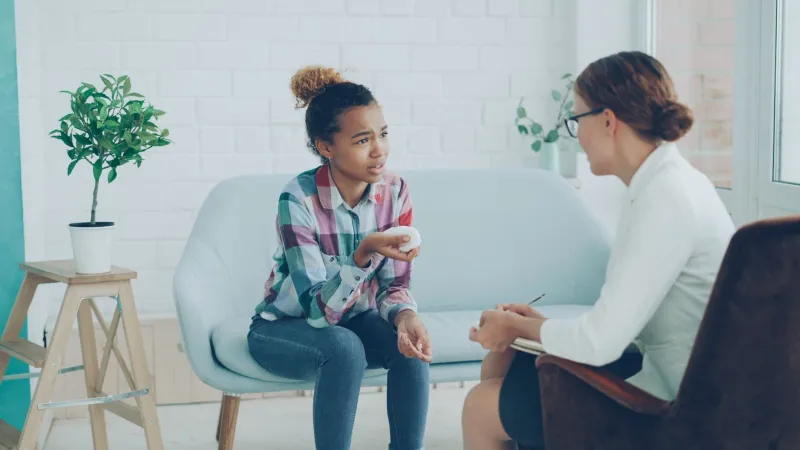
Somewhere between a trending sound and a sponsored skincare ad, your phone is quietly becoming a therapy room. Not the kind with the beige couch and the awkward silences — the kind where somebody who looks like you, sounds like you, and gets the particular exhaustion of navigating this world as a member of the African diaspora is telling you, in plain terms, that what you're feeling has a name. And that it's not your fault.
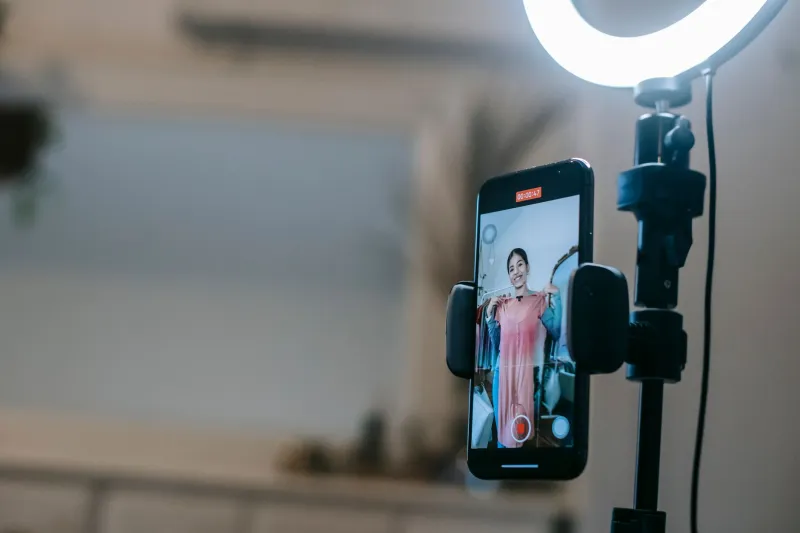
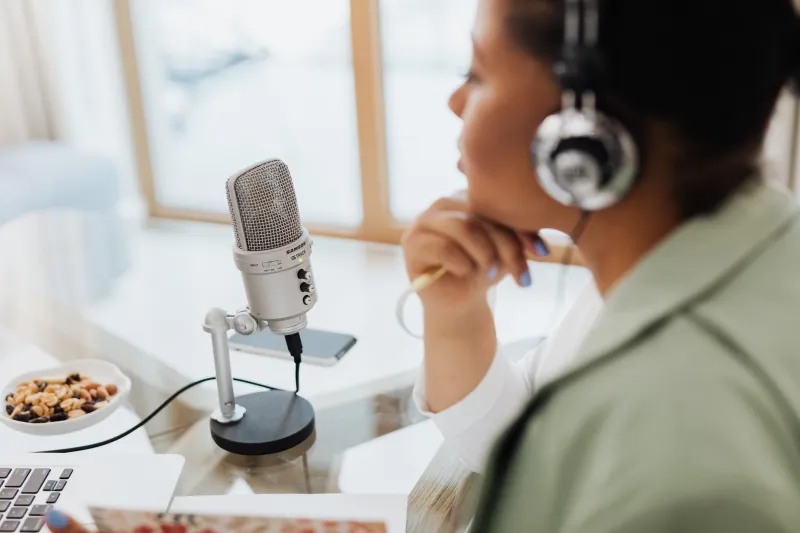
This is the new frontier of Black mental health, and it's playing out in sixty-second clips, Instagram carousels, and live sessions that pull thousands of viewers at a time. A generation of diaspora therapists, counselors, and healing practitioners is showing up online not just to educate, but to dismantle — piece by piece — the Western-centric framework that has long made therapy feel like someone else's medicine.
When the Couch Doesn't Fit
Let's be honest about where we started. For most of Black America — and certainly for those of us whose roots stretch back to the Caribbean, West Africa, East Africa, or the broader diaspora — traditional therapy carried a lot of baggage. The model itself was built around a very particular kind of patient: white, middle-class, and operating within a cultural context where talking to a stranger about your feelings wasn't seen as weakness or, worse, betrayal of the family.
For diaspora communities, the barriers ran deeper. There was the obvious stuff — cost, access, the near-impossible task of finding a therapist who wasn't going to pathologize your cultural practices or mistake communal living for enmeshment. But there was also something more insidious: a therapeutic language that treated individualism as the goal, that had no framework for intergenerational trauma passed down through colonization, forced migration, or the specific grief of being between two worlds and fully belonging to neither.
"Western psychology was not built with us in mind," says one Afro-Caribbean therapist who has built a following of over 200,000 on TikTok. "When I first started practicing, I kept running into this wall where my clients would come in with very real, very valid pain, and the clinical tools I'd been trained to use just didn't fit. I had to go looking for something else."
That something else, it turns out, had been there all along.
Bringing the Ancestors Into the Session
What makes the current wave of diaspora mental health creators genuinely different from the broader wellness boom is the intentional centering of ancestral knowledge. These aren't practitioners who are simply diversifying a white-dominated field — they're actively building something new from older roots.
You'll see it in the way they talk about grief. Rather than pushing clients toward the Western five-stage model, many diaspora therapists draw on African philosophical frameworks — Ubuntu, the Akan concept of Sankofa — that understand healing as a communal and cyclical process rather than a linear one. You'll see it in the integration of somatic practices rooted in African movement traditions, in the acknowledgment of spiritual distress as a legitimate clinical concern, and in the refusal to separate the body's memory from the mind's.
One Nigerian-American licensed clinical social worker who runs a wildly popular Instagram account puts it simply: "My grandmother didn't have a therapist. She had rituals. She had community. She had stories. I'm not saying those replace clinical care — I'm saying we need to stop acting like they don't count as care at all."
Her recent series on intergenerational trauma — specifically the way colonial violence echoes through parenting styles, relationship patterns, and even physical health — racked up millions of views and filled her private practice waitlist for months.
TikTok as the New Town Square
The platform question is worth sitting with for a minute, because it's not accidental that so much of this is happening on TikTok and Instagram rather than in, say, Psychology Today.
For diaspora communities spread across cities, time zones, and continents, social media has always functioned as something the Ebon Agora community knows intimately — a gathering place, a marketplace of ideas, a way to stay tethered to culture when geography tries to cut that thread. These therapists understood that if you want to reach people who've been historically underserved by mental health systems, you go where those people already are.
And where they are, increasingly, is online at 11pm, doom-scrolling after a long day of code-switching, managing microaggressions, and carrying the invisible weight of being a bridge between cultures. A sixty-second video that says this is what racial battle fatigue looks like in the body or this is why your parents showed love through sacrifice instead of words hits differently in that context than a pamphlet in a waiting room ever could.
The parasocial element matters too. Many of these creators are transparent about their own diaspora experiences — the first-generation guilt, the hyphenated identity, the complicated relationship with a homeland they may have never lived in but still grieve. That vulnerability builds trust in a community that has very good historical reasons to be skeptical of institutions.
Building Practices That Center the Community
Virality is one thing. Sustainability is another. What's particularly striking about this cohort of practitioners is how intentionally many of them are building practices that don't just attract diaspora clients but are structurally designed to serve them long-term.
Sliding scale fees, group healing circles, community workshops offered in partnership with Black churches and cultural organizations, multilingual resources — these aren't afterthoughts. They're the architecture. Several practitioners have also moved toward hybrid models that combine one-on-one clinical work with community programming, recognizing that healing in diaspora contexts is rarely, and perhaps shouldn't be, a solitary endeavor.
There's also a growing emphasis on training the next generation. A number of these therapists run mentorship programs specifically for Black and diaspora clinicians who are entering a field that still doesn't adequately prepare them to serve their own communities. The goal isn't just to fill a gap — it's to change the pipeline entirely.
The Pushback Is Real — And Expected
It would be naive not to acknowledge the friction. Some corners of the clinical establishment are not entirely comfortable with practitioners who blur the lines between therapy and cultural education, between evidence-based practice and ancestral wisdom. There are legitimate conversations to be had about scope of practice, about the risks of parasocial therapeutic relationships, about what happens when a TikTok comment section becomes a de facto support group.
These therapists are largely having those conversations openly. Many are explicit with their audiences about the difference between psychoeducation and therapy, and actively encourage followers to seek one-on-one clinical support. The best of them treat their platforms as a front porch — a place to start the conversation, lower the barrier, make the idea of getting help feel less foreign — rather than a replacement for the deeper work.
The Healing Was Always Here
What this movement ultimately represents isn't a rejection of mental health care. It's a reclamation. It's diaspora communities saying: we have always known how to heal each other. We've just been told, for a very long time, that our ways didn't count.
Now, with a phone and a platform and a whole lot of hard-earned clinical training, a generation of Black diaspora healers is stitching those two things together — the ancestral and the clinical, the communal and the individual, the old knowledge and the new tools. And millions of people, finally seeing themselves reflected in a field that spent too long looking the other way, are showing up to receive it.
The algorithm, it turns out, can hold space too.