Tri-Continental Kids: How Gen Z Is Building Home Everywhere and Nowhere at Once
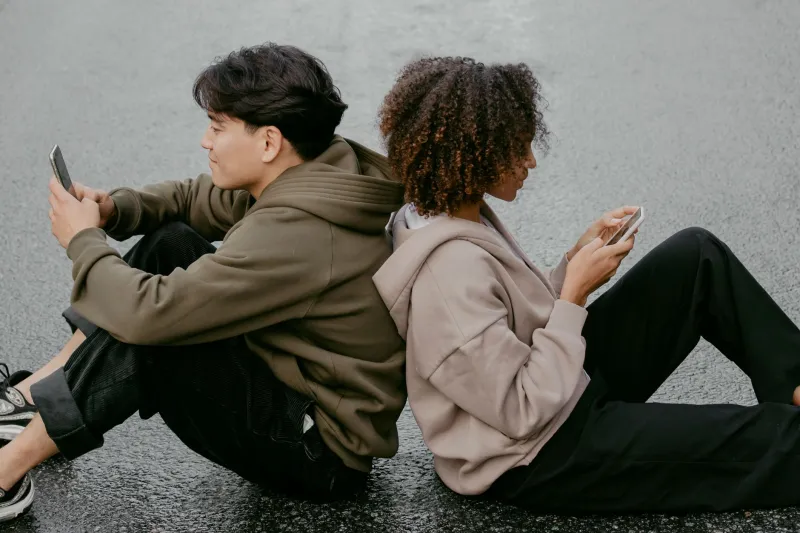
Adeola is nineteen years old. She was born in Accra, raised in Atlanta, and spends most of her emotional life somewhere in between — specifically, a Discord server called "Afro Everywhere" where 4,000 members from Lagos to Toronto to Birmingham swap memes, debate Afrobeats beef, and help each other navigate visa applications at 2 a.m. Ask her where home is and she'll laugh before she answers.
"Home is complicated," she says. "But also, home is kind of everywhere now? Like, I feel seen in a way my mom never did at my age."
That tension — complicated but also kind of everywhere — might be the defining emotional weather of Gen Z diaspora life. Born between 1997 and 2012, this cohort inherited the hyphenated identities their parents and grandparents stitched together under pressure. But where older generations often had to choose — assimilate or preserve, stay or return — Gen Z is running a completely different playbook. One that the internet wrote for them.
The Binary Their Parents Broke Themselves On
For first-generation immigrants who arrived in the US in the '80s and '90s, the social contract was brutal in its simplicity: blend in enough to survive, hold on to your culture enough to remember who you are. There wasn't much infrastructure for the in-between. You went to your ethnic church or mosque, you cooked your food at home behind closed doors, you maybe found a small community of people from your country — and that was your lifeline.
The second generation — the millennials — grew up caught in the middle of that negotiation. Many felt too American for their parents' world and too African or Caribbean for their American peers. That particular loneliness shaped a whole generation of identity crises, therapy sessions, and, eventually, a lot of incredible art.
Gen Z watched all of that happen and decided they weren't interested in the binary.
"My parents had to pick a lane," says Kwame, a twenty-year-old Ghanaian-American student in Houston. "I don't feel like I have to. I'm Ghanaian when I'm on the phone with my grandma. I'm Black American when I'm with my friends here. And then online, I'm just... diaspora. All of it at once."
TikTok as a Third Homeland
If you spend any time on DiasporaTok — the loosely organized constellation of creators, commenters, and community members who center African and Caribbean identity on the platform — you start to notice something. The content doesn't perform nostalgia. It doesn't perform assimilation either. It just lives.
Creators in their late teens and early twenties are making videos that casually weave Pidgin into English sentences, that teach Twi slang over Afrobeats instrumentals, that debate whether jollof rice discourse is actually a proxy war for something deeper about post-colonial identity — and they're doing it with the same energy they'd bring to any other cultural conversation. No trauma. No explanation required.
This matters more than it might seem. For older diaspora members, cultural expression often came loaded with the weight of justification — you were always explaining yourself to someone, either defending your Africanness to Americans or your Americanness to family back home. Gen Z creators have largely dropped the defense. They're not making content for the uninitiated. They're making it for each other.
The audience is global, the references are layered, and the comment sections function like living community halls — the kind of gathering spaces the Ebon Agora concept was built to celebrate.
Discord, Group Chats, and the Architecture of Belonging
Beyond TikTok, the real infrastructure of Gen Z diaspora community is quieter and more intentional. Discord servers organized around specific ethnic identities, regional hubs, creative interests, and even academic struggles are functioning as genuine social anchors for young people who might be the only Nigerian or Jamaican or Eritrean kid in their college dorm.
These spaces do real work. Members share scholarship opportunities targeted at diaspora students. They coordinate watch parties for Nollywood releases. They argue about music. They grieve together when something happens back home. They celebrate when someone gets their citizenship, their degree, their first job offer.
"It's the closest thing I have to a village," says Zara, an eighteen-year-old Somali-American in Minneapolis. "My parents had their mosque community. I have my servers. It's different but it serves the same purpose — people who get your whole context without you having to explain it."
Virtual reality is starting to enter this conversation too, though it's still early. Platforms like VRChat have seen small but growing pockets of diaspora community-building — virtual spaces decorated with cultural aesthetics, events that mirror real-world celebrations like Eid or Carnival or Afrobeats listening parties. Whether VR becomes a genuine frontier for diaspora belonging or stays a niche experiment remains to be seen. But the impulse driving it is real: the hunger to occupy a shared space when geography makes physical gathering impossible.
Rejecting the "Return" Mythology
One of the quieter shifts happening in Gen Z diaspora culture is a renegotiation of the return narrative. For many immigrant families, the idea of eventually going back — to Nigeria, to Jamaica, to Senegal — functioned as both a comfort and a pressure. Home was back there, preserved in memory, waiting.
Gen Z is largely skeptical of that framing. Not because they don't love their ancestral countries — many do, deeply — but because they've grown up watching that mythology create pain. Parents who sacrificed everything for a return that never came. Family members back home who resent the diaspora for leaving. A romanticized version of a place that real, complicated, living countries can never actually match.
Instead, many young diaspora members are investing in relationship with their heritage countries on more honest terms. They're learning languages not to prove authenticity but because they want to actually talk to their grandparents. They're visiting not to reclaim something lost but to understand something real. And they're building economic and creative connections — supporting African artists, investing in diaspora-focused funds, collaborating across continents — that don't require them to physically relocate to be meaningful.
What This Generation Is Actually Building
The hybrid identity Gen Z diaspora kids are constructing isn't a compromise. It's not a lesser version of something more whole. It's genuinely new — a form of belonging that is distributed, digital, emotionally multilingual, and stubbornly resistant to reduction.
They move between registers with ease that would have been unimaginable to their grandparents and that still sometimes startles their parents. They hold grief and joy about their heritage simultaneously without needing to resolve the tension. They build community across time zones and then show up for each other in ways that feel intensely local.
For a generation that gets accused of having no attention span and no roots, they are — quietly, persistently, creatively — doing the deepest work of diaspora: figuring out how to carry where you come from into wherever you're going, without dropping either one.
Home, for these kids, isn't a fixed coordinate. It's something you build, maintain, and rebuild — in a group chat, on a feed, in a comment section, in a phone call with a grandmother who still doesn't understand why you can't just come back.
Maybe that's always been what home was. They're just the first generation with the tools to make it visible.