Mother Tongue Takeover: The Diaspora Artists Bringing Yoruba, Swahili, and Amharic to Your Playlist

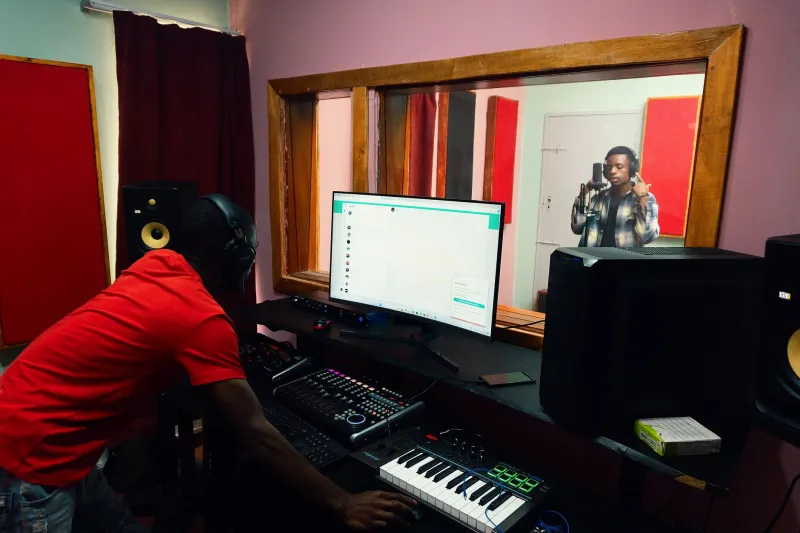
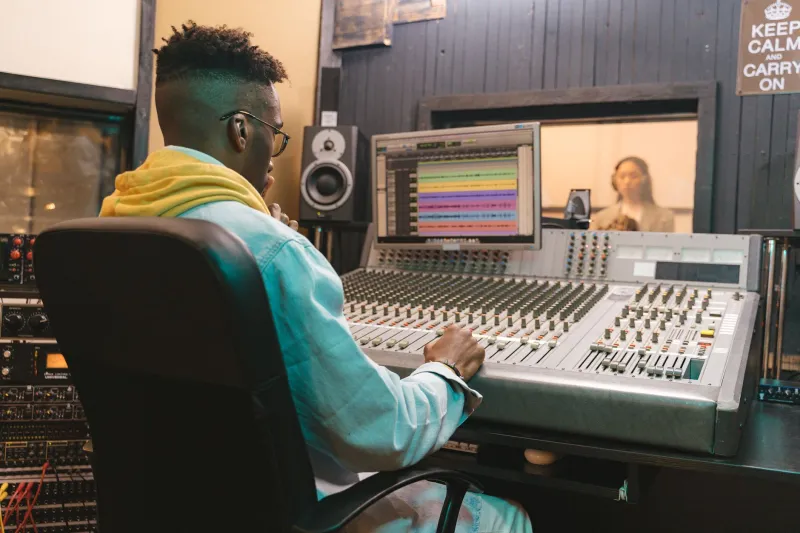
Somewhere in a studio in Atlanta, a second-generation Nigerian-American artist is recording a verse that switches between English, Yoruba, and Pidgin mid-bar. She's not code-switching to be quirky. She's not leaving breadcrumbs for listeners who don't get the reference. She's just speaking—the way she actually speaks—and betting that the world will catch up.
She's probably right.
The Long Shadow of Assimilation
For decades, the implicit contract for diaspora artists trying to break into American markets was brutally clear: leave the mother tongue at the door. The music industry's version of "global appeal" was really just a euphemism for English-language accessibility, and the artists who got the furthest were often the ones who most effectively filed down the edges of their cultural specificity.
It worked, in a narrow sense. But it also meant generations of African and Caribbean diaspora musicians producing music that felt slightly hollowed out—technically successful, culturally diluted.
What's happening now is the long-overdue correction.
Burna Boy Didn't Ask Permission
Let's be direct about who kicked this door open widest. Burna Boy's ascent to Grammy-winning, stadium-filling status—achieved while rapping and singing in a fluid mix of Yoruba, Pidgin English, and standard English—demonstrated something the industry had quietly refused to believe: that African-language music could generate American chart success without being retrofitted for Western consumption.
His 2020 album Twice as Tall reached the top 10 of the Billboard World Albums chart and introduced millions of American listeners to Pidgin cadences and Yoruba phrases not as exotic novelty, but as the natural texture of the music. You didn't need a translation to feel it.
Wizkid's "Essence" went even further, becoming a bona fide American summer anthem while carrying Yoruba inflections throughout. The song didn't explain itself. It didn't need to.
Beyond the Afrobeats Vanguard
The shift isn't limited to the artists already in the spotlight. Across the diaspora, a younger cohort is pushing even harder into linguistic reclamation.
Ethiopian-American artists are threading Amharic into R&B and hip-hop productions with an ease that would have seemed commercially risky five years ago. Samsa, an Amharic-language rapper based in the US, has built a dedicated following among Ethiopian diaspora communities while drawing curious listeners from well outside that base—proof that specificity can be its own form of universality.
In the East African diaspora, Swahili is emerging as a marker of pride and commercial identity simultaneously. Artists like Bien of Sauti Sol—who straddles Kenyan and broader diaspora audiences—have long understood that Swahili lyrics carry emotional weight that English translations simply cannot replicate. That understanding is now spreading to second-generation Kenyan and Tanzanian American artists who are making music for their own communities first, and finding that wider audiences follow.
And in the Francophone African diaspora, there's a parallel story unfolding with artists blending Lingala, Wolof, and French in ways that are reaching Black American audiences through shared rhythmic and cultural DNA.
The Algorithm Finally Got the Memo
For a long time, streaming algorithms actively punished linguistic diversity. Playlist curators—both human and machine—operated on the assumption that English-language tracks had broader appeal and therefore deserved more prominent placement. Non-English tracks got siloed into world music categories that felt more like quarantine than celebration.
That logic is breaking down, and Gen Z listeners are a big reason why.
Spotify's internal data has repeatedly shown that younger listeners are dramatically more likely to engage with non-English content than any previous generation—a trend driven partly by K-pop's normalization of non-English pop success, but also by the growing cultural confidence of diaspora communities who are now large enough, and connected enough, to move metrics.
TikTok has accelerated this in ways that are hard to overstate. When a Yoruba-inflected hook goes viral on TikTok, it doesn't come with subtitles. It spreads because the sound is irresistible, and listeners lean in rather than tune out. The algorithm rewards engagement, and engagement doesn't require comprehension—it requires feeling.
Identity Isn't a Marketing Strategy
It's worth being careful here, though, about how we frame this shift. The artists leading this movement aren't using their mother tongues as a branding differentiator. They're not making a calculated bet on multicultural marketing trends. For most of them, this is something more personal and more political.
Many second and third-generation diaspora artists grew up in households where speaking an African language was either actively discouraged by assimilationist pressures or quietly allowed to fade through disuse. Reclaiming Yoruba or Amharic in a song isn't just a stylistic choice—it's an act of cultural retrieval. It's a message to parents and grandparents. It's an argument, made through music, that what was nearly lost is worth recovering.
"When I sing in Yoruba, I'm singing to my grandmother," one emerging Nigerian-American artist told us. "The fact that someone in Iowa might stream it is cool. But that's not why I'm doing it."
That distinction matters. The most powerful work in this space isn't engineered for crossover. It's made with full creative integrity for a specific community—and the crossover happens anyway, because authenticity travels.
What the Industry Still Gets Wrong
Despite the progress, the music industry's relationship with African-language content remains complicated. Radio programmers at major US stations are still broadly resistant to non-English tracks outside of established Latin formats. Major label A&R departments will sign an Afrobeats artist and then immediately begin suggesting they add more English verses to improve "mainstream viability."
The artists pushing back on those suggestions—and there are more of them now than ever—are doing something genuinely brave. They're betting their careers on the idea that the market will expand to meet them rather than the other way around.
So far, the bet is paying off.
The Agora Is Multilingual Now
The gathering place has always held many voices. The African diaspora in America is not a monolith—it's a chorus of Yoruba and Amharic and Swahili and Twi and Wolof and Lingala, all carrying the weight of history and the energy of something being reclaimed in real time.
The music coming out of that chorus right now is some of the most vital being made anywhere. And it doesn't owe anyone a translation.
Your playlist is about to get a lot more interesting. Let it.