No Passport Required: How Afrobeats Built a Global Empire One Bedroom Studio at a Time
There's a moment in music history that doesn't have a clean timestamp. No single chart position, no Grammy acceptance speech, no Rolling Stone cover you can point to and say: that's when it happened. The Afrobeats takeover was more like a tide — slow, then all at once. And if you want to understand how a genre rooted in Lagos street culture became the soundtrack to Miami pool parties, Brooklyn block parties, and TikTok videos from teenagers in Nebraska, you have to follow the producers. The ones who were never really in one place to begin with.
The Studio Is Wherever the Wi-Fi Is
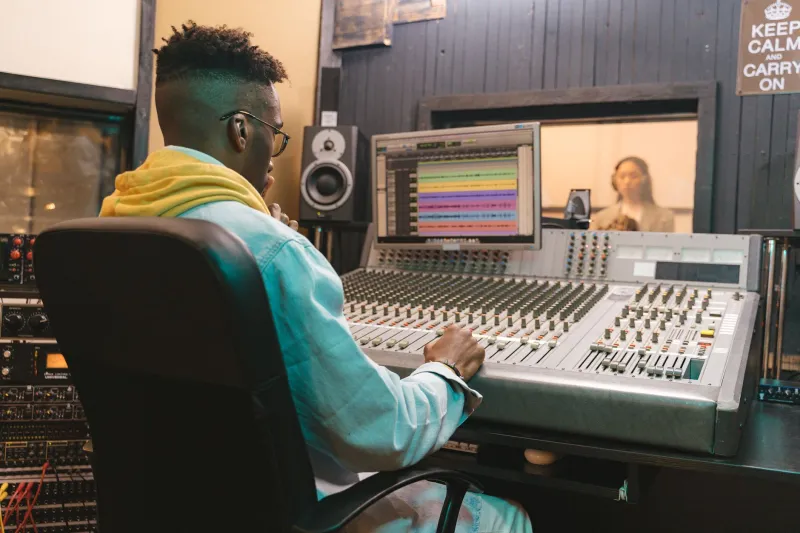
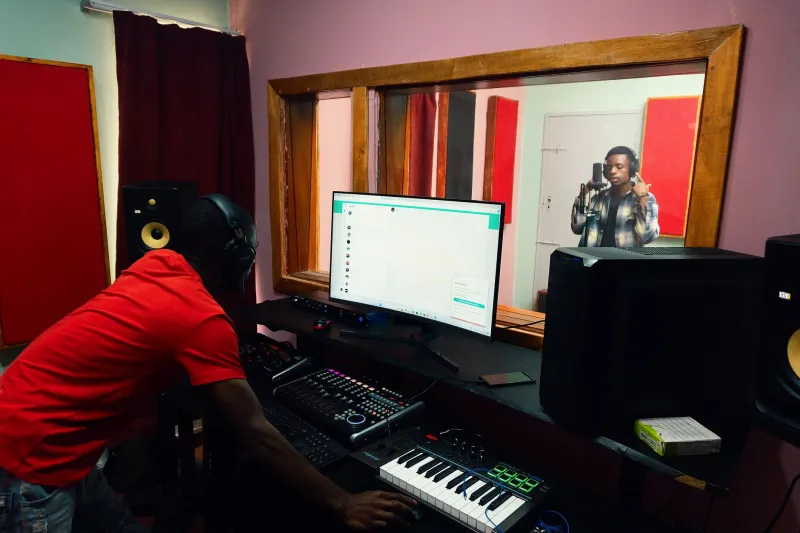
Ask any serious Afrobeats producer where they make their music, and the answer will probably make your head spin. Producers like London-based Nonso Amadi have talked openly about bouncing between studio sessions in Lagos, finishing mixes on laptops in Uber rides, and sending stems to collaborators in Atlanta — all for a single record. This isn't chaos. It's infrastructure. Diaspora infrastructure.
The transnational production pipeline that powers Afrobeats didn't emerge from a music industry strategy document. It grew organically out of necessity. Nigerian artists who relocated to the UK or the US didn't leave their creative networks behind — they stretched them. A beatmaker in Surulere could send a loop to his cousin in the Bronx, who'd add a 808 pattern informed by years of listening to trap, then send it back with a vocal reference from a Yoruba praise song his grandmother used to hum. The result? Something that sounded like nothing else on earth.
That hybridity is the whole point. Afrobeats — and let's be clear, we're talking about the contemporary pop-inflected genre, distinct from Fela Kuti's Afrobeat with a hard 't' — has always been a conversation between the continent and its diaspora. What changed in the 2010s was the technology that made that conversation instantaneous and the social media platforms that broadcast the results to anyone willing to listen.
Brooklyn, Lagos, and the Third Space
When producers and A&R folks talk about where Afrobeats got its American footing, Brooklyn comes up constantly. Not just because of the Afro-Caribbean communities concentrated in Flatbush and Crown Heights, but because of the cultural cross-pollination happening in studios across the borough. Producers who grew up in Nigerian or Ghanaian households but came of age listening to Jay-Z, Aaliyah, and Missy Elliott were uniquely positioned to build bridges.
Think about what that sounds like in practice. A producer who spent summers visiting family in Accra, who learned to program drums watching YouTube tutorials from producers in Houston, who got his first break cutting tracks for a reggaeton artist in the Bronx — that producer isn't making music from one tradition. He's operating from what cultural theorists might call a third space, a creative territory that doesn't belong to any single geography or genre.
This is why Afrobeats hits land so differently from anything else on the radio. The rhythmic patterns draw from West African highlife and jùjú traditions. The bass frequencies carry the weight of American hip-hop and R&B production. The vocal melodies loop and breathe in ways that feel almost Caribbean. None of these elements are accidental. They're the fingerprints of a diaspora that refused to flatten itself into a single identity.
The Engineers Nobody Talks About
For all the attention producers get, the mixing and mastering engineers working in this space are criminally underappreciated. These are the folks responsible for making sure a record that was tracked in a home studio in Lagos, with vocals recorded in a bedroom in East London, sounds polished enough to sit next to a Beyoncé album on Spotify.
That's not a small ask. Different recording environments introduce different sonic problems — background noise, room acoustics, varying microphone qualities. The engineers who specialize in Afrobeats have developed a particular skill set: knowing how to honor the warmth and texture of a performance recorded in imperfect conditions while still delivering the clean, punchy sound that streaming algorithms and radio formats demand.
Some of these engineers work out of established studios in Atlanta or New York. Others operate entirely remotely, receiving files from clients they've never met in person. The relationships are built on reputation, on referrals passed through diaspora networks, on the kind of trust that develops when someone consistently makes your music sound better than you thought possible.
Moving Beyond Center and Periphery
For decades, the dominant narrative around African music on the global stage was a center-periphery story. Western music industries were the center — the gatekeepers, the tastemakers, the ones who decided what got distributed, what got promoted, what got to count as 'world music' and what got to count as just music. African artists who wanted international reach had to make peace with that hierarchy, often at significant creative cost.
Afrobeats broke that model, and it broke it from the inside. The genre didn't conquer the American mainstream by appealing to Western gatekeepers first. It built its own global distribution network through diaspora communities, through Nigerian-owned streaming platforms, through YouTube channels and SoundCloud pages and WhatsApp group chats where new music circulated for weeks before any major label paid attention.
By the time Drake was hopping on a Wizkid record and Beyoncé was curating The Lion King: The Gift with an Afrobeats-heavy tracklist, the audience was already there. The industry didn't create the demand — it finally caught up to it.
What Comes Next
The Afrobeats wave isn't cresting. If anything, it's deepening. Younger producers, many of them first-generation Americans with family ties to Nigeria, Ghana, Senegal, and beyond, are pushing the sound into new territories — blending it with Afro house, with drill, with amapiano influences drifting up from South Africa. The diaspora network keeps expanding, keeps generating new nodes, new conversations, new third spaces.
What's remarkable is how little any of this has depended on traditional music industry infrastructure. The labels came later. The streaming deals came later. The Grammy categories came much, much later. The music — and the community that made it — was already global.
That's the real story of Afrobeats. Not a genre that got discovered. A genre that was always there, built by people who knew exactly what they were doing, waiting for the rest of the world to catch up.