Beat Architects: The Diaspora Producers Quietly Rewiring American Music From the Inside Out
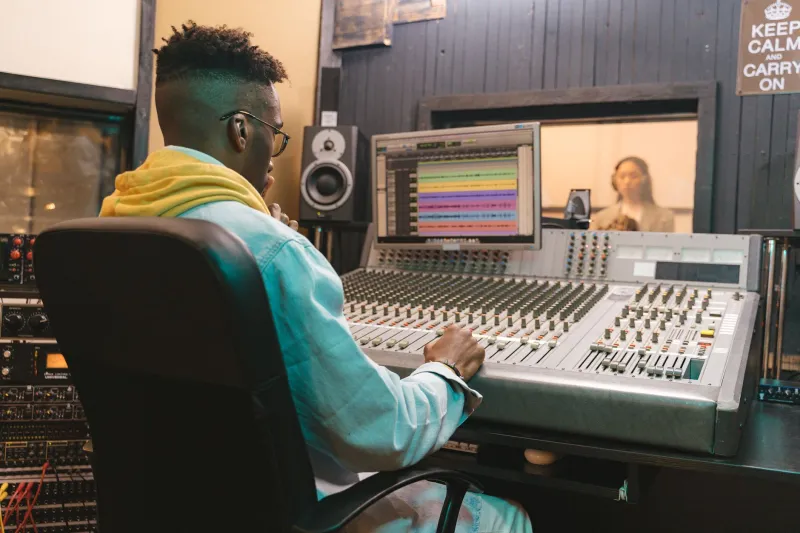
The Studio Is Everywhere Now
There's a moment in a lot of Afrobeats records — right around the second verse — where something shifts. The percussion gets a little more insistent, the melody does something unexpected, and suddenly you're not quite sure if you're listening to a pop song, an R&B record, or something that didn't have a name in American music until very recently. That moment is not an accident. It's architecture. And the architects are increasingly people who grew up with one foot in Lagos, Accra, or Nairobi and another planted firmly in the American music industry.
In 2024, Afrobeats isn't just a genre that crossed over. It's become load-bearing infrastructure for the way pop music sounds in the United States. And the people making that happen aren't always the names on the marquee.
The Producers Running the Background
Ask any A&R rep at a major label about their most in-demand beatmakers right now and a pattern emerges. Nigerian-born producers — many trained in Lagos studios before relocating or splitting time in Atlanta, Houston, or the Los Angeles metro area — are getting placements on records across hip-hop, R&B, and mainstream pop. Names like Spax, Rexxie, and Quebeat have become shorthand inside the industry for a specific sonic palette: layered percussion rooted in highlife and Afrobeats traditions, melodic sensibilities that feel simultaneously familiar and genuinely fresh to American ears.
What makes this moment distinct from earlier crossover waves — think reggae in the 1970s or dancehall in the 1990s — is the degree to which these producers are not diluting their sound to fit American radio. If anything, the opposite is happening. American radio is moving toward them.
"The frequency has changed," says one Los Angeles-based producer who splits production duties between a home studio in Inglewood and a facility in Lagos he co-owns with his cousin. "Five years ago, you'd submit a beat and someone would ask you to take out the talking drum pattern or simplify the rhythm. Now those are the elements they're calling about. They want exactly that."
Infrastructure Built on Both Sides of the Atlantic
The business machinery enabling this shift is worth understanding because it's genuinely new. Diaspora producers are not simply selling beats remotely. They're building ecosystems — publishing companies, production collectives, and sync licensing operations — that function across multiple continents simultaneously.
A significant number of the most active Afrobeats producers working in the American market maintain legal and financial infrastructure in both Nigeria and the US, allowing them to collect royalties and negotiate placements through whichever framework is most advantageous for a given deal. This isn't just clever business; it's a structural reflection of identity. These producers live in the hyphen between cultures, and they've built their companies to match.
Streaming platforms have accelerated the process considerably. When Spotify and Apple Music began investing in dedicated Afrobeats playlists and genre-specific algorithmic lanes, it created a feedback loop: diaspora listeners in the US started surfacing these sounds in their listening data, which prompted the platforms to push the music further into general-audience recommendations, which brought in new listeners, which generated more data. By the time radio programmers noticed, a significant portion of their audience had already self-educated.
What It Sounds Like in Practice
Pay attention to the records topping the charts in the second half of 2024 and you'll notice specific sonic signatures that trace back directly to West African production traditions. The use of the shekere or its electronic approximation as a high-frequency rhythmic anchor. Bass lines that sit slightly behind the beat in a way that creates tension without ever fully resolving it. Vocal production choices — heavy on harmonics, generous with reverb — that owe more to Afropop conventions than to the dry, close-mic sound that dominated American trap production for most of the previous decade.
These aren't ornamental flourishes. They're structural decisions that change how a song feels in your body, how it moves in a room, how it works on a speaker system in a car. Producers who grew up listening to Fela Kuti and King Sunny Ade alongside Michael Jackson and Jay-Z are bringing a genuinely different set of reference points to the work, and it shows.
The Larger Cultural Moment
It would be easy to frame this as simply a music industry story — producers finding a market, labels chasing a trend. But that reading undersells what's actually happening. What the current wave of diaspora producers represents is a renegotiation of whose aesthetic vocabulary gets to define American popular culture.
For generations, the traffic largely flowed one direction. American music — particularly Black American music — exported itself globally, often without adequate credit or compensation to the communities that created it. What's different now is the existence of a diaspora infrastructure sophisticated enough to reverse that current, or at least to complicate it in interesting ways. Producers who hold Nigerian passports and California driver's licenses are not importing a foreign sound. They're expressing a genuinely hybrid identity that the American music industry is only beginning to understand.
"I'm not trying to make Afrobeats for American audiences," one Houston-based producer said when asked about his approach to crossover records. "I'm making music that's true to how I actually hear the world. The fact that American audiences are connecting to it — that tells you something about the world they're actually living in, whether they know it or not."
Where It Goes From Here
The producers currently reshaping American radio are not a vanguard of something that hasn't arrived yet. They are the thing that has already arrived. The infrastructure is built. The relationships are in place. The data is in the platform algorithms.
What comes next is a question of credit and recognition — whether the industry will acknowledge the specific cultural origins of this sonic shift or absorb it into a generic notion of "global pop" that conveniently obscures who built it. The diaspora community, at least, knows the answer to that question. The Agora has been here all along. Everyone else is just catching up.