Loading Culture: The Diaspora Game Studios Turning Folklore Into Playable Worlds
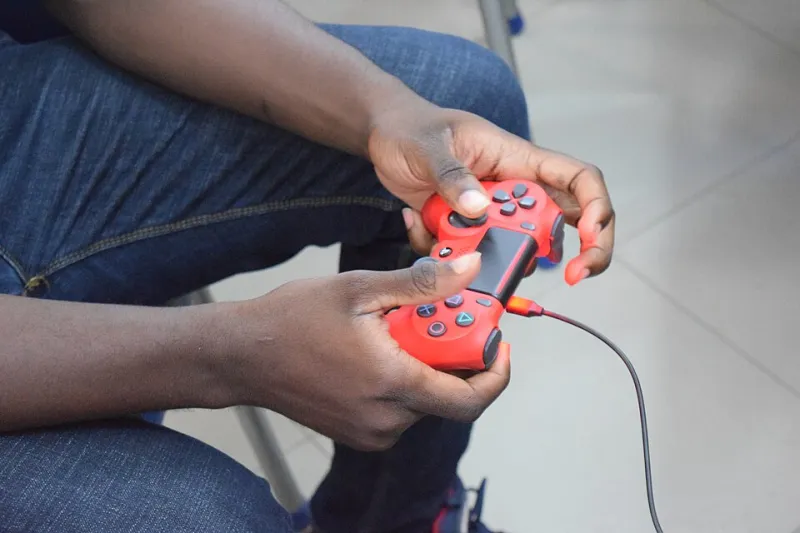
Photo: $ir$terlin, CC BY-SA 4.0, via Wikimedia Commons
You hit start and the loading screen does something games rarely do: it bows. A baobab tree silhouetted against a rust-colored sky. A talking drum underneath the menu. A market square at dusk, rendered with the kind of care usually reserved for castles and starships.
That’s the opening move of a small, stubborn, fast-growing wave of Black diaspora game developers — indie studios scattered from Lagos to Nairobi to Accra to Atlanta — who are treating interactive storytelling as the next front in cultural preservation. Not a museum exhibit. Not a textbook chapter. A world you can walk around in, argue with, and occasionally lose to.
The Griot Was Always a Game Designer
Strip away the console and the controller and you find the same engine running through most African and Caribbean storytelling: participation. Call and response. The pause before the punchline of a folktale, waiting for someone in the room to fill the silence. The uncle who makes the children answer the riddle before he’ll finish it.
“Our stories were never passive,” says a Lagos-based developer who has spent three years building a game around Yoruba river spirits. She asked that we not name the project yet. “The audience was always a player. We’re just catching up to what our grandmothers already knew.”
That framing explains why the fit feels less like a trend and more like a homecoming. A folktale changes depending on who’s listening and how they respond. So does a game. Both reward the person who leans in.
Proof of Concept
The idea isn’t theoretical anymore. In 2024, Tales of Kenzera: ZAU — the Bantu-inspired action platformer from Surgent Studios, led by actor-turned-founder Abubakar Salim — put grief, ancestry, and a distinctly African-influenced cosmology at the center of a polished console release. Years before that, Cameroon’s Kiro’o Games built Aurion: Legacy of the Kori-Odan entirely outside the Western pipeline, proof that a studio on the continent could ship a full RPG with its own mythology intact.
What’s changed in the years since is infrastructure. Payment rails got better. Engine tools got cheaper. Discord servers replaced the old necessity of being in the same city as your collaborators. A designer in Houston can now build a game with a composer in Kumasi and an illustrator in Peckham, and nobody has to explain why the sound of a kora belongs in a boss fight.
Lagos Builds for the Phone, Atlanta Builds for the Console
The scenes have distinct personalities. Nigeria’s developers tend to be mobile-first out of pragmatism — phones are everywhere, consoles aren’t — which has pushed studios toward short-session, high-charm design and clever monetization that doesn’t punish players. Kenya’s community has grown around game jams and university clubs, small teams prototyping fast and publishing faster. South Africa has one of the longest-running indie scenes on the continent, with a generation of developers who cut their teeth long before “Afrofantasy” became a marketing term.
In the States, Atlanta has quietly become a hub of its own, fed by the city’s film and music infrastructure and by HBCU pipelines that keep turning out artists who can code. The result is a transatlantic feedback loop: a mechanic prototyped in Nairobi gets playtested in Brooklyn, and the notes come back sharper.
Worlds That Speak Back
Here’s where diaspora developers tend to part ways with the industry’s habits. Generic “Africa-inspired” fantasy — the kind that stirs a whole continent into one vaguely tribal soup — doesn’t survive contact with an audience that knows the difference between Akan and Yoruba, between Haitian Vodou and something a concept artist saw on a mood board.
The better studios build consultation into production. Elders get credited. Language gets checked by native speakers. Religious practice gets handled with actual care rather than aesthetic borrowing. It’s slower. It’s also why players trust these worlds enough to stay in them.
Playdates Across Time Zones
The community layer is where this gets genuinely interesting. Co-op modes built for cousins on different continents. Discord tournaments that run on two clocks. Fan wikis written by teenagers in Minneapolis and Manchester who can now argue about lore the way their parents argued about football.
And then there’s the teaching. Several studios have started building in glossary features, character codexes, and voice-acted proverbs so that a player who’s never heard a particular language can still learn a phrase or two. Not homework. Just texture — the same way a game set in medieval Europe teaches you what a portcullis is.
The Next Level
Nobody in this scene is pretending the economics are easy. Funding is thin, publishers are risk-averse, and the marketing budgets that push a game into the cultural conversation are usually reserved for studios that already have a hit. But the audience is real and it’s global, and it’s been waiting a long time to see itself rendered with respect instead of as a backdrop.
So watch the loading screens. The ones that bow. That’s what it looks like when a culture stops being a setting and starts being a player.