Stir, Season, Remember: How Black Diaspora Families Are Turning Recipes Into Acts of Resistance
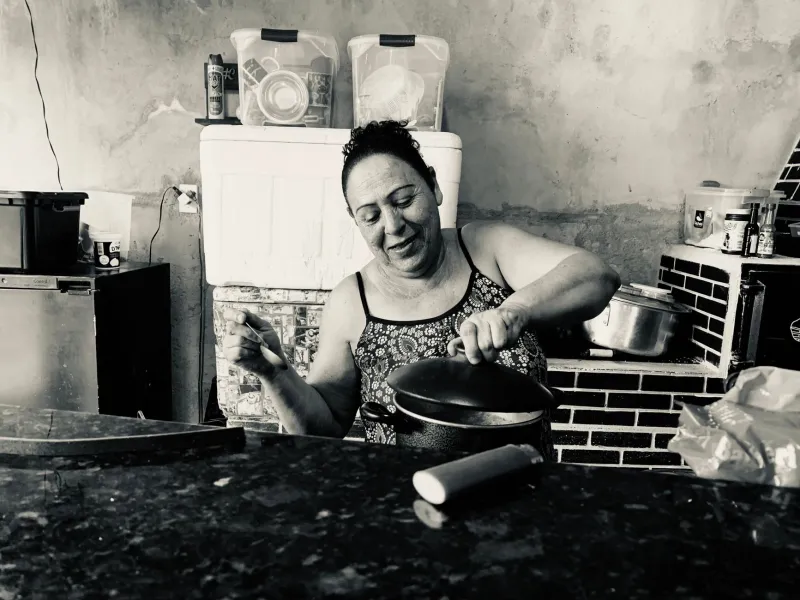
Nkechi Okafor's grandmother never measured anything. Not the crayfish. Not the palm oil. Definitely not the ogiri. She cooked the way she'd been taught — by watching, by smell, by the particular sound of a pot hitting the right temperature. When she passed in 2019, she took a lot of that knowledge with her.
"I remember standing in the kitchen trying to recreate her ofe onugbu and just crying," says Okafor, a 34-year-old Nigerian American living in Charlotte. "Not because I missed her — I mean, yes, because I missed her — but because I realized I'd never asked. I'd just assumed she'd always be there to show me."
That grief pushed Okafor to start a project she now calls Mama's Measurements, a growing digital archive where she documents not just recipes, but the oral histories attached to them. The dishes her grandmother learned during the Biafran War. The substitutions her mother made when West African ingredients were impossible to find in 1990s Ohio. The way food became a map of migration, survival, and stubborn cultural loyalty.
She's not alone in this work. Across the African diaspora in America, a quiet but urgent movement is taking shape — one that treats the family recipe not as a casual inheritance but as a document of resistance.
More Than Ingredients
Food has always been political in Black communities. During slavery, enslaved Africans smuggled seeds in their hair — okra, black-eyed peas, sorghum — planting the literal roots of what would become Southern cuisine. After emancipation, recipes passed through generations carried not just flavor but memory, identity, and defiance against a system designed to strip both.
The diaspora's relationship with food documentation is an extension of that same impulse. When you move across continents, when your children grow up in neighborhoods where nobody else cooks like you do, the kitchen becomes a classroom. And if you don't write the curriculum down, it disappears.
"There's a particular kind of erasure that happens to immigrant families," says Dr. Amara Sow, a food anthropologist at Howard University who has spent the last decade studying culinary preservation in West African diaspora communities. "It's not dramatic. It's just slow. Second generation kids assimilate. Third generation kids don't even know what they've lost. Recipe documentation is one of the most effective ways communities push back against that."
The Rise of the Family Cookbook Project
What's different now is the scale and the intentionality. This isn't just grandmas writing things down in spiral notebooks. Diaspora families are approaching food documentation with the same energy they'd bring to building an oral history project — recording video, cataloguing variations, interviewing elders before it's too late.
In Houston, a Ghanaian American family recently self-published a 200-page cookbook that took three years and four family reunions to complete. It includes QR codes linking to video demonstrations by aunties who refused to be filmed but agreed to narrate over footage of their hands working dough. In the DC metro area, a Somali women's collective has been building a shared digital recipe archive since 2021, tagging each dish with the region it came from, the occasion it was traditionally made for, and notes on how the recipe evolved after resettlement.
Some projects are going even deeper. Adaeze Williams, a food blogger and archivist based in Brooklyn, has been running The Diaspora Pantry for three years — a project that documents not just recipes but the specific ingredients that make them possible. Which brand of dried iru comes closest to what you'd find in Lagos. Where to source the right kind of egusi in cities with small Nigerian populations. How to grow utazi in a Brooklyn apartment.
"The recipe is only half the story," Williams says. "The other half is knowing what you're actually supposed to be tasting. And that knowledge is disappearing too."
Cooking as Testimony
What makes these projects genuinely radical is the way they refuse to separate food from history. A recipe for jollof rice isn't just a recipe — it's a record of migration routes, economic realities, and the particular creativity born from scarcity. When diaspora families document their cooking with that context intact, they're doing something closer to archival work than recipe sharing.
Okafor's Mama's Measurements project now includes audio recordings of her mother and aunties talking about food memories stretching back to the 1960s. There's a recording of her aunt describing the specific way her grandmother's kitchen smelled during harmattan season. Another of her mother explaining why she started adding tomato paste to a dish that never traditionally included it — because that was what was available, and you adapted.
"These recordings are going to outlast all of us," Okafor says. "My daughter is five. When she's thirty and trying to cook something that connects her to where she came from, she's going to have more than just a list of ingredients. She's going to have voices. She's going to have stories."
Dr. Sow sees this as part of a broader shift in how the diaspora thinks about cultural preservation. "Previous generations preserved by doing — by cooking the same dishes every Sunday, by bringing the same food to every gathering. That's still happening, but now there's also this impulse to document, to build something that can survive even when the people who hold the knowledge are gone."
The Table as Archive
There's something deeply fitting about a community that has always gathered around the table now treating that table as an archive. Food is one of the most immediate, sensory ways diaspora identity gets transmitted — you don't just learn that you're Nigerian or Jamaican or Senegalese, you taste it, you smell it, you learn to cook it.
And when that transmission is threatened — by assimilation, by geography, by the simple fact that elders die — the act of writing it down becomes something more than documentation. It becomes insistence. A refusal to let the culture thin out quietly across generations.
Nkechi Okafor is still working on recreating her grandmother's ofe onugbu. She's gotten close, she says. Not exact — probably never exact — but close enough that when she serves it to her daughter, something real passes between them.
"My grandmother couldn't have told you what she put in that pot," she says. "But she knew. It was in her hands. I'm just trying to make sure it gets into my daughter's hands too. That's all this is. That's everything this is."