Pages, Power, and the People: How Diaspora Book Clubs Are Flipping the Script on Publishing
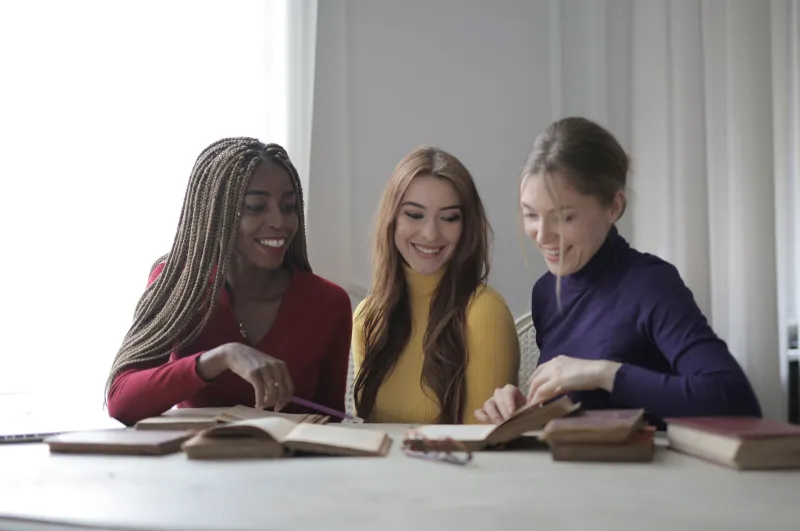
There's a particular kind of magic that happens when Black women gather over a shared book and a bottle of wine on a Tuesday night in someone's Chicago apartment. The conversation never stays on the page for long. It sprawls into memory, into politics, into the grandmother who used to read scripture aloud like poetry. It becomes something much bigger than a book club. It becomes a reckoning.
That energy — intimate, urgent, deeply rooted — is now scaling. Across the United States, diaspora-led reading communities are transforming from cozy neighborhood circles into full-blown cultural institutions. And the publishing world, which has historically treated Black readers as a niche market rather than a mainstream force, is finally being forced to pay attention.
From the Living Room to the Algorithm
Bookstagram, BookTok, Goodreads reading groups — the digital infrastructure for literary community-building has never been more accessible, and Black readers have moved into that space with serious intention. Accounts like @ReadingBlack and countless others have amassed tens of thousands of followers not by chasing virality, but by being genuinely, specifically themselves. They post dog-eared paperbacks next to jollof rice. They host Instagram Live discussions that run ninety minutes because nobody wants to stop talking. They build community in a way that mainstream publishing's marketing departments can't manufacture.
The numbers back up the influence. When a well-followed diaspora book club selects a title — particularly one by an emerging Black author — the ripple effect can be immediate and measurable. Pre-orders spike. Goodreads ratings climb. Bookstores in Atlanta, Houston, and Brooklyn report sellouts within days. Publishers have started quietly tracking which clubs are picking which books, because the correlation between a diaspora community co-sign and actual sales is impossible to ignore.
This is what literary power looks like when it's redistributed.
Centering the Authors Who Got Left Behind
Here's the thing mainstream publishing has never quite figured out: Black readers are not a monolith, and diaspora readers especially are hungry for work that reflects the full complexity of their experience. A Ghanaian American reader in the Bronx doesn't just want stories about slavery or trauma or the struggle. She wants to see herself navigating immigration paperwork and calling her auntie back in Accra and falling in love on the 4 train. She wants Nnedi Okofor's speculative worlds and Yaa Gyasi's historical sweep and Raven Leilani's raw contemporary urgency — all of it, at the same time.
Diaspora book clubs have become expert curators of exactly that kind of range. Many of them operate with explicit mandates: African authors, Caribbean authors, authors from the diaspora writing in languages other than English. Some rotate themes — one month focused on Afrofuturism, the next on postcolonial literature from Francophone Africa. These aren't arbitrary choices. They're acts of cultural stewardship, ensuring that writers who might otherwise get buried under the algorithm or overlooked by major review outlets find their audience anyway.
For emerging writers, a single nod from the right community can change the trajectory of a career. Authors who have been championed by diaspora book clubs describe the experience as fundamentally different from a mainstream review. It's not just coverage — it's kinship. Readers show up to events, tag the author in posts, write long personal responses about what the book meant to them. That kind of engagement builds a readership that lasts.
Negotiating at the Table
What's newer — and honestly more exciting — is the way some of these communities are starting to flex their economic muscle with full awareness of what they're doing. A few diaspora book clubs have begun formalizing partnerships with publishers, negotiating early reader copies, co-branded events, and in some cases, actual consulting roles on acquisitions. They're not just consumers of the industry anymore. They're participants in shaping it.
This shift matters because publishing has a well-documented gatekeeping problem. The industry remains overwhelmingly white at the editorial level, which means acquisition decisions are frequently filtered through a lens that doesn't always recognize the market value — let alone the cultural value — of Black diaspora stories. When community organizers with proven track records of moving books can walk into a meeting and say, "our 12,000 members will read this," that changes the math.
Some book clubs have gone even further, launching their own imprints or partnering with independent Black-owned publishers to bring specific titles to their communities. It's a model that echoes the Susu tradition — pooling collective resources and trust to build something none of them could have built alone.
The Vibe Is the Point
It would be a mistake, though, to reduce all of this to economics. The most powerful thing happening inside diaspora book clubs isn't the sales data. It's the conversation.
Think about what it means to read a novel by a Nigerian author about navigating dual identity — and then discuss it with twelve other people who have lived some version of that exact story. The book becomes a mirror and a door simultaneously. People cry. People laugh. People call their mothers after the meeting. That experience of collective meaning-making, of feeling genuinely seen through literature, is something the algorithm cannot replicate and the publishing industry cannot manufacture.
It's also, notably, something that has always existed in Black communities. The tradition of gathering around stories — whether that's the griot circle, the church mothers' meeting, or the barbershop debate — is ancient. Diaspora book clubs are just the latest form it's taken, updated for a generation that processes their lives through both ancestral memory and group chats.
What Comes Next
The momentum is real and it's building. More clubs are forming, more publishers are paying attention, and more authors are actively cultivating relationships with these communities rather than waiting for traditional media to discover them. A few diaspora-led literary festivals have emerged in recent years specifically to create physical space for this culture — bringing together readers, writers, and publishers in a setting that centers the community rather than the industry.
The question now is whether the publishing world will genuinely reckon with what this movement is saying, or simply try to extract value from it without changing the underlying structures. The community, for its part, seems clear-eyed about that risk. They've seen what happens when Black cultural spaces get discovered by industries that don't actually respect them.
But here's what's different this time: the readers are organized, they're connected across cities and time zones, and they have built something that belongs to them. No publishing house can take credit for what happened in that Chicago apartment on a Tuesday night. That was theirs from the start.